Make the World See
By Patrick Weems |
In the summer of 2023, a 14-year-old named Cyrus Carmack-Belton walked into a store in South Carolina and was shot in the back as he ran away. This June, a jury found the man who shot him not guilty.
Later that same summer in 2023, the Emmett Till and Mamie Till-Mobley National Monument was signed into law by President Biden, nearly seventy years after another 14-year-old was killed in Mississippi.
These are not the same case. Different states, different men, different facts. But two children walked into a store—Emmett into Bryant's Grocery, Cyrus into a gas station down the road from home. Neither walked away with his life. Two mothers will grieve forever. And in both cases, the man who pulled the trigger walked free.
Let me be honest about the hard part. Cyrus had a gun on him, and he should not have. But he never pointed it at anyone, it fell during the chase, and he was shot in the back, running away because the owner believed Cyrus stole four bottles of water he had already put back. A child died fleeing. That fact does not move.
When a child dies like this and no one is held to account, the impulse is to write a new law. And we should. But a law tells people what they cannot do. It does not teach them what a life is worth. You can pass every statute in the world and still raise a generation that sees a Black child as a threat before it sees a child.
So ask the real question: How do we keep Black children safe?
We do it by becoming a people who can sit with pain. A people who do not flinch from it, do not erase it, do not rush past it to the next thing. The barn where Emmett Till was killed sat unmarked for seventy years because we did not want to look. But you cannot heal what you will not name, and you cannot teach a child that their neighbor's life is sacred while you bury the proof that it was taken.
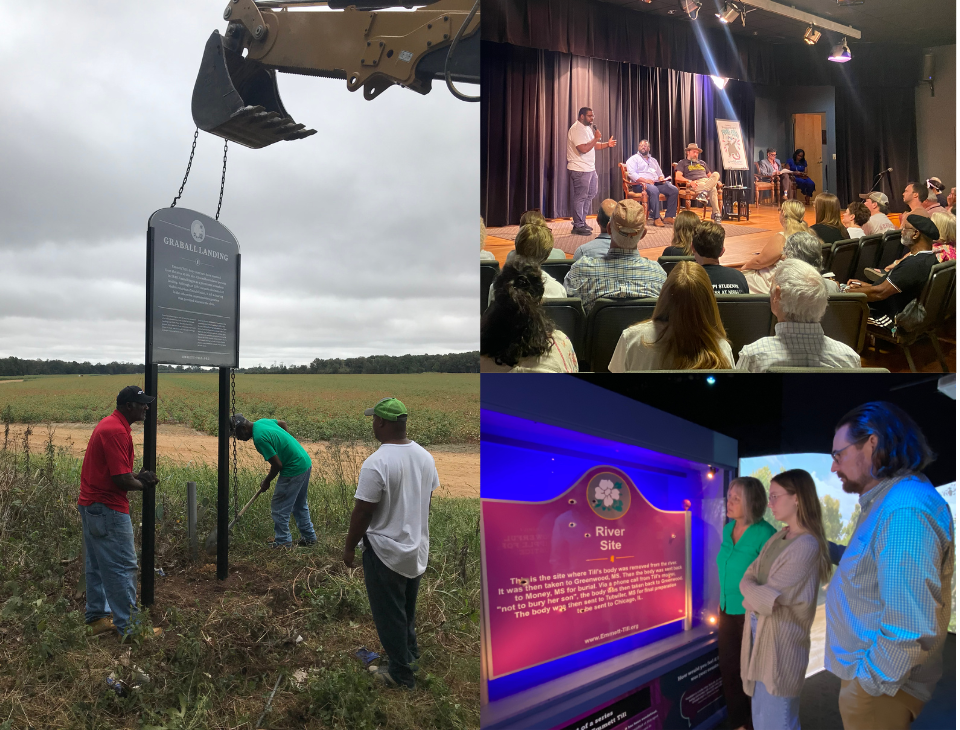
That is why ETIC exists. We keep the barn standing and tell the truth on the ground where it happened. Not to relive the horror, but because bearing witness together is how a people learns to carry grief instead of fleeing it. Mamie Till-Mobley understood this in 1955. She did not ask for a statue or a sentence. She opened her son's casket and said, Let the world see. That was her testimony, and it changed a nation.
And the United States did change. When Mamie laid her grief bare, she made the country look at what it had been doing in the dark, and the looking did its work. Rosa Parks said she was thinking of Emmett the day she kept her seat. A generation came up behind her, the Emmett Till Generation, John Lewis and so many others, who carried that child's memory into a movement that bent this country closer to its promise. There is no way to count the lynchings that did not happen because Mamie Till-Mobley refused to look away. That is the power of one mother's witness. But what one generation builds, the next must renew. Democracy is not a monument that stands on its own. It is a fire that has to be tended, and the verdict this June is proof that the work is not finished and the ground is not yet secure.
You cannot think your way to healing. You have to feel it, witness it, stand in the place where the harm was done. Memory and story are not decoration. They are how we prepare the ground, so that the next jury, the next neighbor, the next child grows up believing that every life is sacred.
Mamie said, "Let." Let the world see—an invitation, a door she opened and trusted the country to walk through. For a while, it did. But an invitation can be ignored. A door can be closed again. We do not have the luxury of waiting on an invitation this time.
We can keep writing laws and tell ourselves we have answered. Or we can do the harder and holier thing.
We have to grieve Cyrus Carmack-Belton and Emmett Till as one societal wound, imagine the lives they should have lived, and make the world see, saving the sites and telling the story so that we never forget it.
This week the country turns 250 years old, still reciting the same line it wrote at the start: that all men are created equal. A great nation must celebrate that promise and have the courage to face everywhere it has fallen short. Cyrus and Emmett are part of that history too—and honoring the day means doing both. |