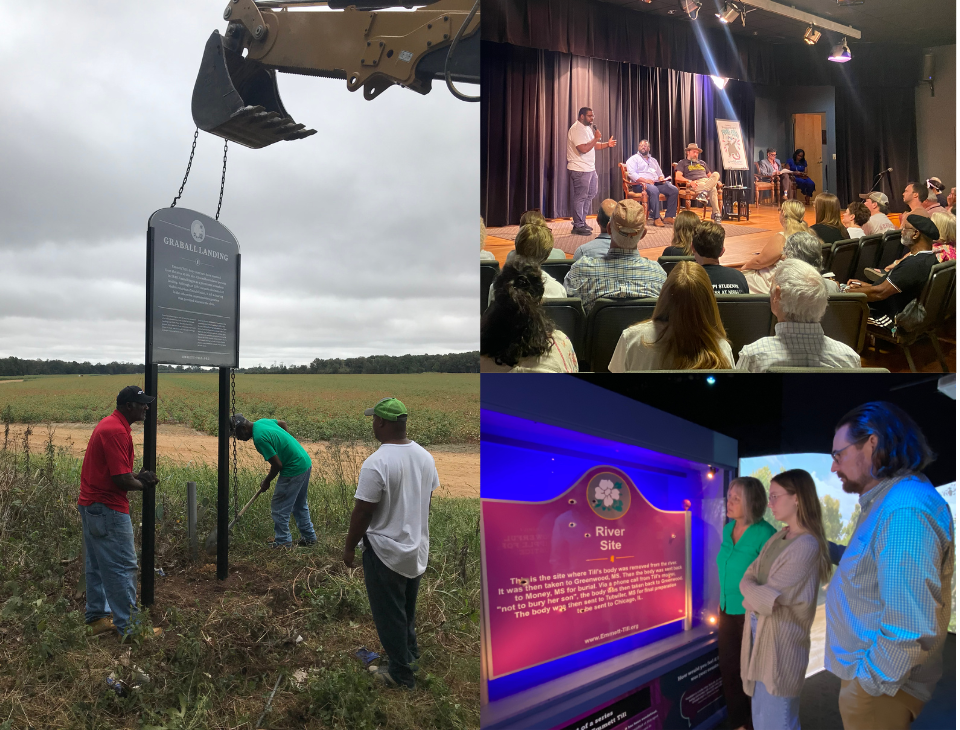
Emmett Till’s Murder Is a Significant Event in Black History. Here’s How It Includes Kentuckians
By Dr. Brandon Erby
On August 28, 1955, Emmett Till, a 14-year-old child from Chicago, was killed in Mississippi while visiting family. Many historians contend that Till’s death ignited the civil rights movement in the United States. Here are three lessons to learn this Black History Month that connect Emmett Till’s death to the Commonwealth of Kentucky.
Dr. Theodore Roosevelt Mason (T.R.M.) Howard
Dr. T.R.M. Howard was a wealthy physician living in the all-Black town Mound Bayou, Mississippi, at the time of Emmett Till’s death. Born on March 4, 1908, in Murray, Kentucky, Dr. Howard was a fiery orator, skilled debater, and founder of the Regional Council of Negro Leadership (RCNL), a civil rights organization mostly active in the Mississippi Delta. Dr. Howard played an instrumental role in locating Black witnesses to testify during the murder trial of the two men charged with killing Till, and he traveled across the nation regularly to speak about the Till case and others.
The Louisville Defender
The Black newspaper the Louisville Defender was founded in 1933 as an affiliate of the ChicagoDefender. Frank L. Stanley, Sr. became the newspaper’s president and editor in 1936 and workedat the newspaper for nearly four decades. Stanley, who also served as the General President of Alpha Phi Alpha Fraternity from 1955 until 1957, printed numerous stories about Till’s death andeven used newspaper resources to investigate if Henry Lee Loggins, a potential witness to Till’smurder, had relocated to Kentucky.
In its September 29, 1955, issue, the Defender published Louisville poet Frederic Jarman’s “Delta Justice,” a poem that lambasted the murder trial’s “Not Guilty” verdict and proclaimed that one day God would “avenge” the “treachery” of the men who had killed Till. Two weeks later, the paper announced that the National Association for the Advancement of Colored People (NAACP) was sponsoring a mass meeting at Plymouth Congregational Church to “continue its fight in seeing that the Till murder does not go unavenged.”
The Emmett Till GenerationThe barbaric images of Emmett Till’s corpse that circulated in JET Magazine unlocked a series of emotions in the people who viewed them, and several of these individuals have Kentucky roots. Boxing legend and humanitarian Muhammad Ali was 13 when Till was killed. “I couldn’t get Emmett out of my mind,” Ali recalled, after seeing the JET photos. John J. Johnson, who became president of the local branch of the NAACP in Franklin, Kentucky, at 17-years-old, has said that the story behind Till’s murder became a cautionary tale for Black boys on how to navigate social settings with white people. Raoul Cunningham’s mother prohibited him from visiting relatives in Alabama after Till was killed. Cunningham joined Louisville’s NAACP Youth Council in 1957 at 14. According to James Embry, Till’s death “sharpened the visibility” of racial hatred and injustice. Embry became the Kentucky State Youth Chair for the NAACP at 15 and encouraged young people to participate in the March on Frankfort alongside Dr. Martin Luther King, Jr. and Jackie Robinson in 1964. Charles Neblett was the same age as Till when he saw the horrific JET images. When asked during a 2013 interview what Till’s murder taught him as an adolescent, Neblett answered: “It told me that I didn’t count in this country.” Neblett became a founding member of the SNCC Freedom Singers in 1962.
Emmett Till’s mother, Mamie Till-Mobley, once said that Till was not just her son but the “universal child.” Seven decades after his fateful death, Emmett Till’s name remains etched in the consciousness of the nation and in the minds of the people of Kentucky.
Dr. Brandon Erby is a writing, rhetoric, and African American studies professor at the University of Kentucky.